Scoupy Receipt Scanner
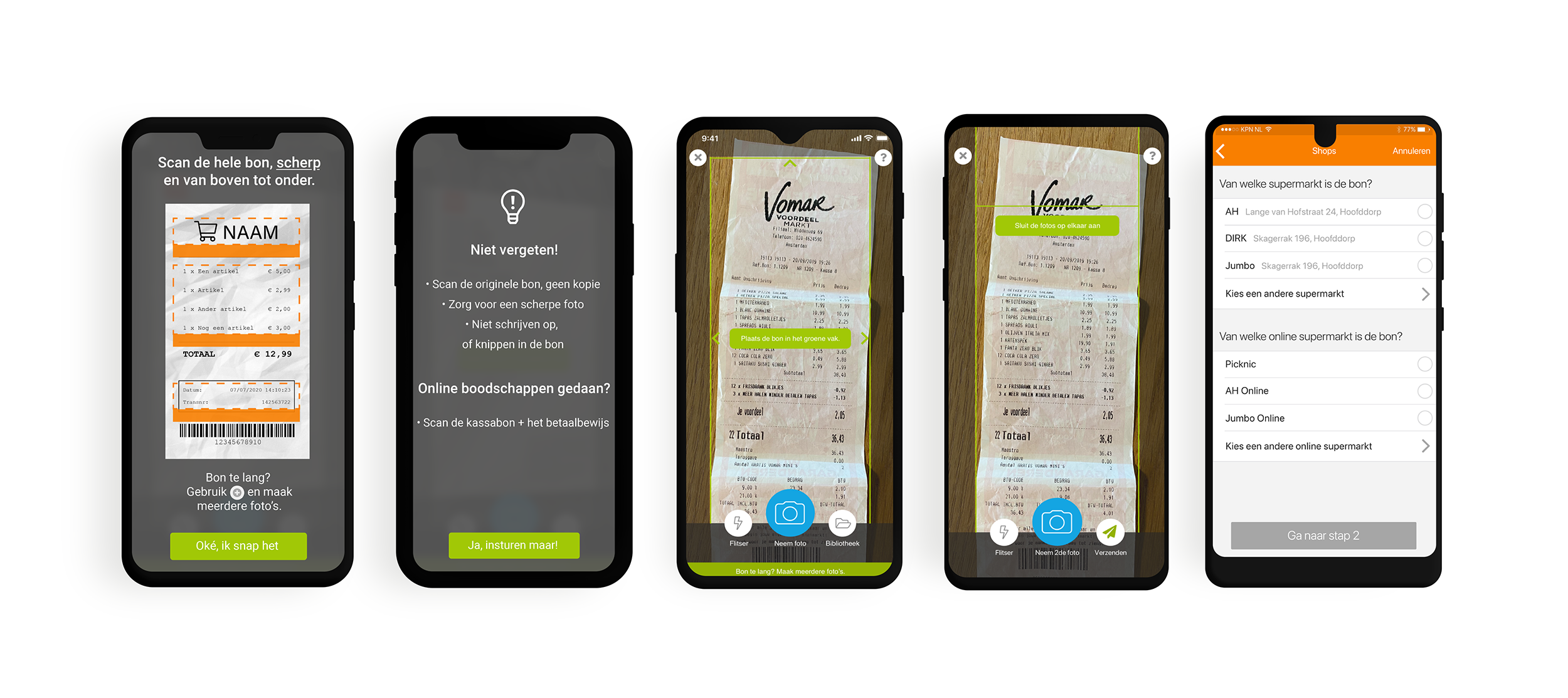
Enhancing User Experience for Hassle-Free Cashback
Overview
At Scoupy, cashback only works if scanning receipts feels effortless. We redesigned the receipt scanner to remove friction, increase trust, and dramatically improve scan success. By combining user-centered design with AI-driven recognition, we turned a frustrating moment into a confident, repeatable action.
Challenge
The existing receipt scanner struggled with real-world behavior. Receipts came in all shapes, sizes, lighting conditions, and levels of crumpling. Users were unsure how to position their receipt and received little feedback during scanning.
The result: a scan success rate of just 67%, high frustration, and many abandoned attempts. The scanner felt unreliable, even when the technology underneath was capable.
Research & Insights
User research showed clear patterns:
Solution
We redesigned the scanner as part of a broader validation flow instead of a standalone feature.
After scanning a receipt, detected purchases are automatically matched with eligible coupons. When matches are uncertain or multiple options apply, the system transitions into a guided selection step where users can confirm or adjust the result.
Key improvements:
Automation where it works. User control where it matters.
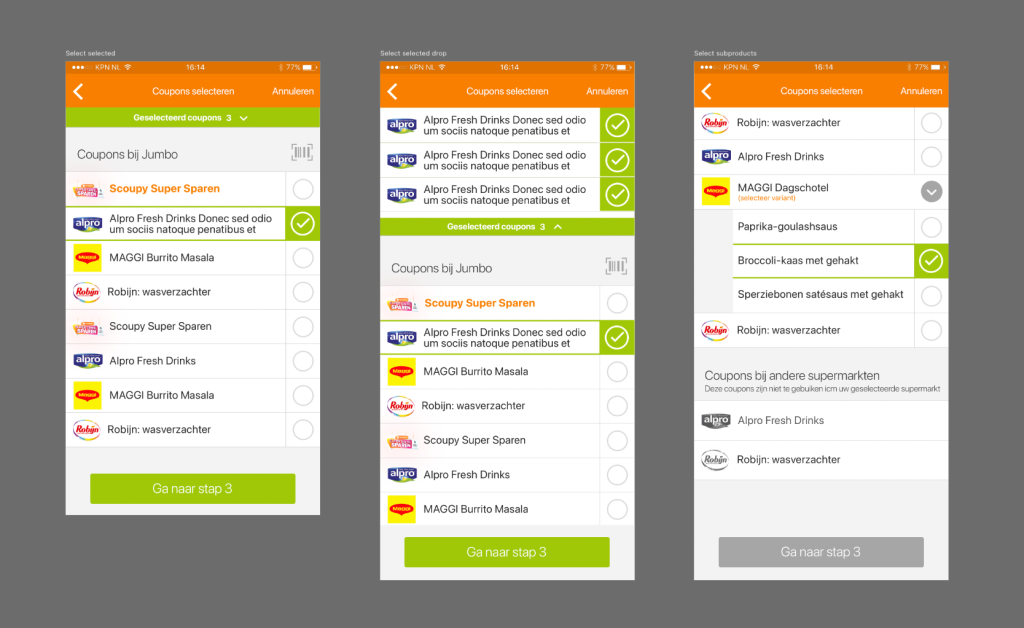
From recognition to validation
After scanning the receipt, recognized purchases are linked to available coupons. When confidence is high, matches are applied automatically.
When ambiguity remains, users are guided through a clear selection step to confirm or correct the outcome.
Role of Machine Learning
Machine learning was used to improve recognition accuracy across different receipt layouts, fonts, and print qualities. The system relied on trained pattern recognition models rather than fully autonomous AI.
Instead of hiding uncertainty, the interface exposed recognition confidence and smoothly handed control back to the user when reliability dropped. This human-in-the-loop approach increased trust and reduced frustration, ensuring users stayed in control when automation was not sufficient.
Results
The impact was immediate and measurable:
More importantly, users stopped blaming themselves when something went wrong. The system felt helpful instead of brittle.